Guild Education: How Your Employer Pays for Your GED
Guild Education is the platform behind employer-paid education — but it is not a school and does not award the GED. Here is how to tell whether your benefit leads to a Penn Foster diploma or a GED, and how to confirm your coverage.

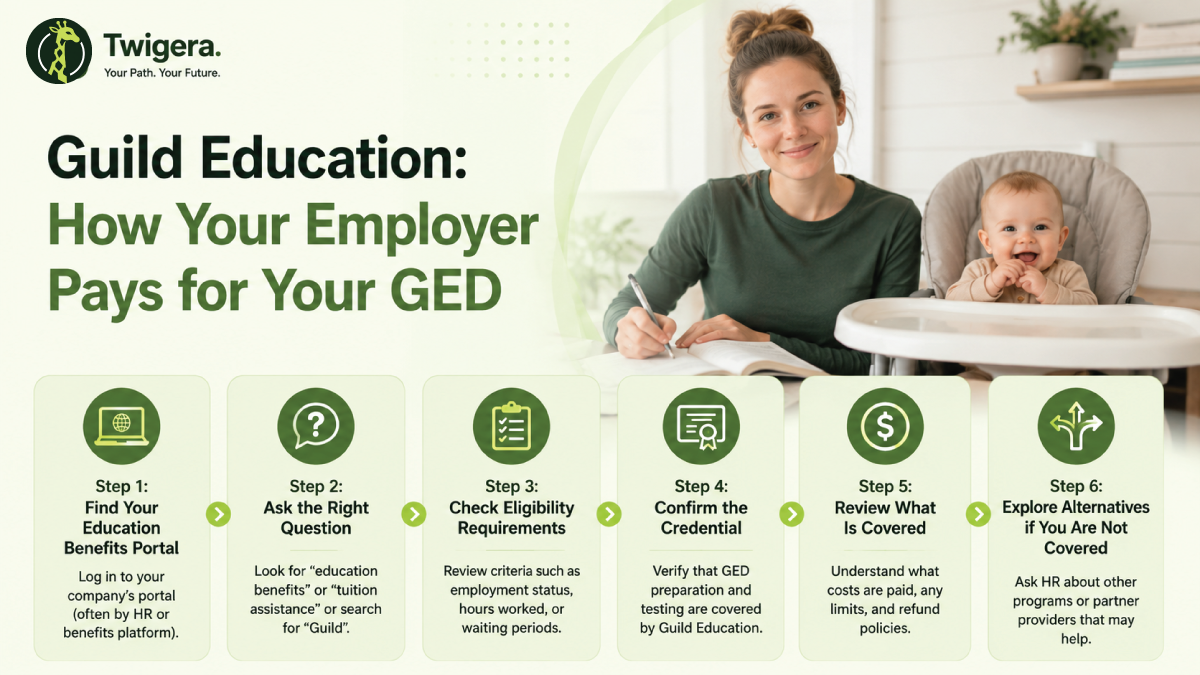
Guild Education is an education-benefits platform — not a school, and it does not award the GED. If your employer uses Guild, you may qualify for an accredited high school diploma through Penn Foster. If your employer uses GEDWorks, you may qualify for the actual GED, with free prep, tutoring, and test vouchers. The key is knowing which program your employer offers, so check your benefits portal or ask HR to confirm.
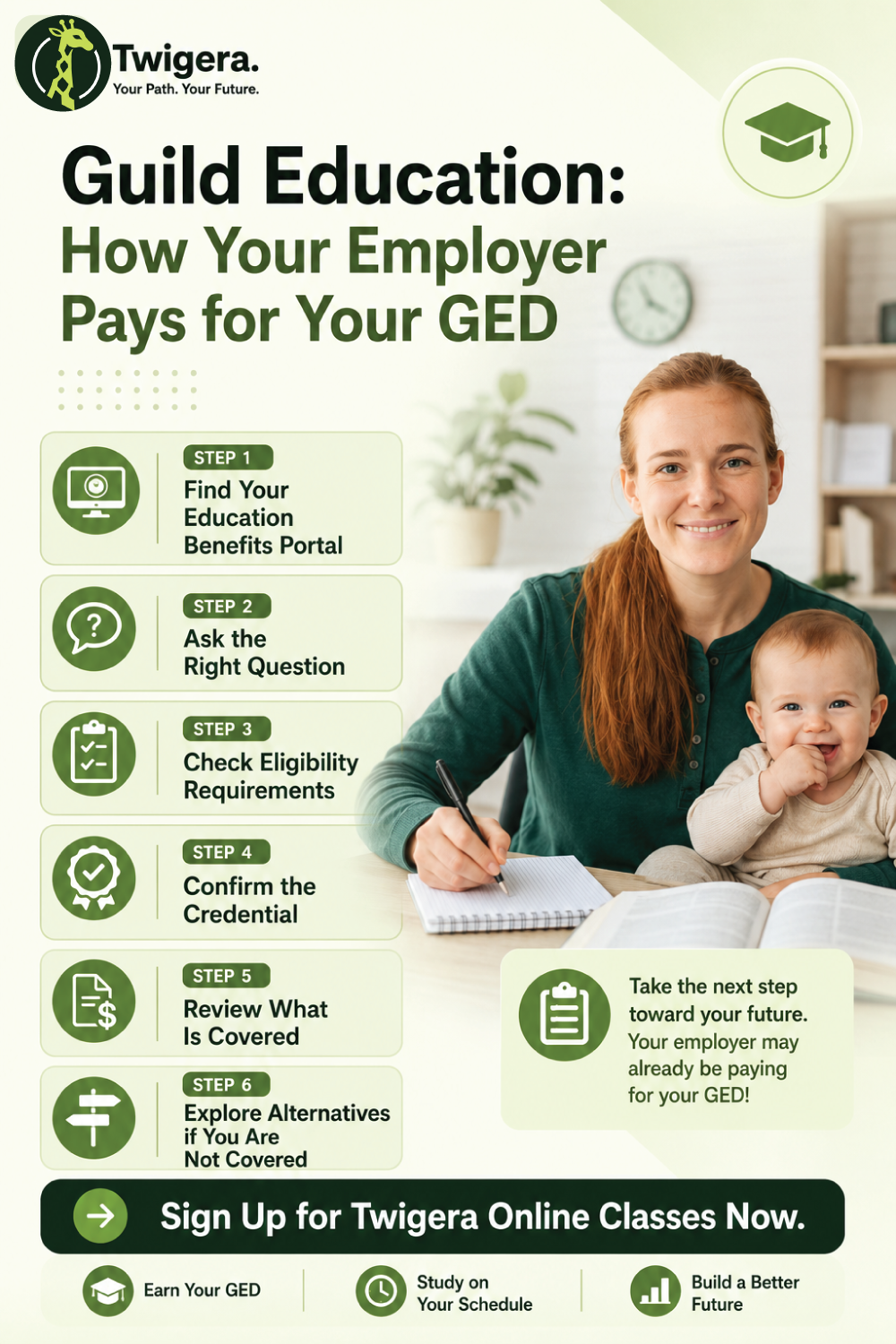
Pin this guide so you can find it again.
We refresh these every season. Save it to a Pinterest board and you’ll get the latest version next time you come back.
Save to PinterestQuestions people ask.
- What is Guild Education?
Guild Education is an education-benefits platform employers use to pay for their workers' education — degrees, certificates, and high school completion programs. The employer typically pays the school directly for covered programs. Guild is not a school and not the GED itself; it connects employees to education providers such as Penn Foster.
- Does Guild Education cover my GED?
Sometimes — read the details carefully. Through Guild, many employers cover an accredited high school diploma through Penn Foster, which is not a GED. Employers that fund the actual GED often use a separate program called GEDWorks. Whether either option is available depends on your specific employer.
- Guild Education vs GEDWorks — what is the difference?
Guild is a broad education-benefits platform; its high school completion pathway through Penn Foster leads to a diploma. GEDWorks is operated by GED Testing Service, the organization behind the GED exam, and leads to the actual GED credential while also covering test fees. They are different programs that lead to different credentials.
- Is Guild Education legit?
Yes. Guild manages education benefits for many Fortune 1000 employers, including Walmart, Target, Chipotle, and Lowe's. Some online reviews relate to working at Guild as an employer rather than to the education benefit itself, so it is important not to confuse the two.
- How do I know if my employer offers Guild or GEDWorks?
Search your company name together with "Guild" or "GEDWorks." You can also ask HR a direct question: does our education benefit include high school completion or a GED, and through which provider? Eligibility requirements such as tenure and hours worked vary by employer.
- Is the GED really free through my employer?
For eligible, covered employees, often yes. GEDWorks covers GED preparation and test fees. Penn Foster diploma programs offered through Guild are frequently fully funded for eligible employees. Coverage depends on your employer and whether the high school completion or GED benefit is included in their catalog.
- How do I log in to Guild Education?
There is no universal public login. You typically sign in through your employer's Guild portal, often using your work credentials or your company benefits website. Employee resource pages usually provide the direct link.
- If my employer pays, do I still need a prep course?
Often, yes. Guild and GEDWorks help pay for the pathway, but you still have to learn the material and pass the exams or complete the coursework. Focused preparation works alongside employer-funded benefits to help you prepare more effectively — and it is an affordable option if your employer does not offer education assistance.
Amara is the editor at Twigera. She came to publishing the long way — a decade teaching the GED in community colleges and adult-learning centers, where she watched students pass not on talent or time, but on the strength of a study plan they actually trusted. Now she shapes the guides students read here for the parent studying after a closing shift, the second-career welder, the grandmother finishing what she started forty years ago. Expect honest timelines, math made survivable, and study plans built around real life — not around a textbook's idea of one.
Take the next step — start today.
Our online GED course includes every subject, a free 30-minute diagnostic, and a 7-day refund on every plan.