

Can You Be a Firefighter with a GED? Yes — Here's How
Most US fire departments accept a GED as a high school equivalent. The real gates are CPAT, the written exam, EMT certification, and the Fire Academy — not your education credential.

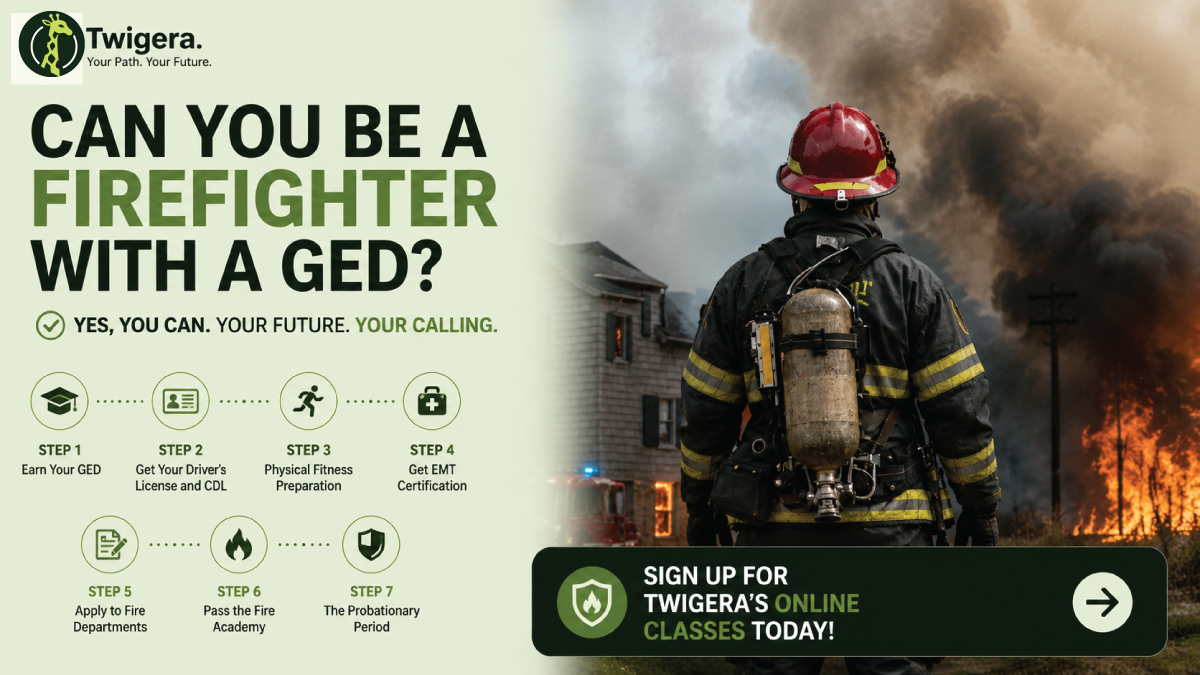
Yes. Most US fire departments accept a GED on equal footing with a high school diploma. Firefighters earned a median wage of $59,530 in May 2024 (BLS); the top 10% earned over $101,330. The real gates are CPAT, the written exam, EMT certification, a clean background check, and the Fire Academy — not your education credential.
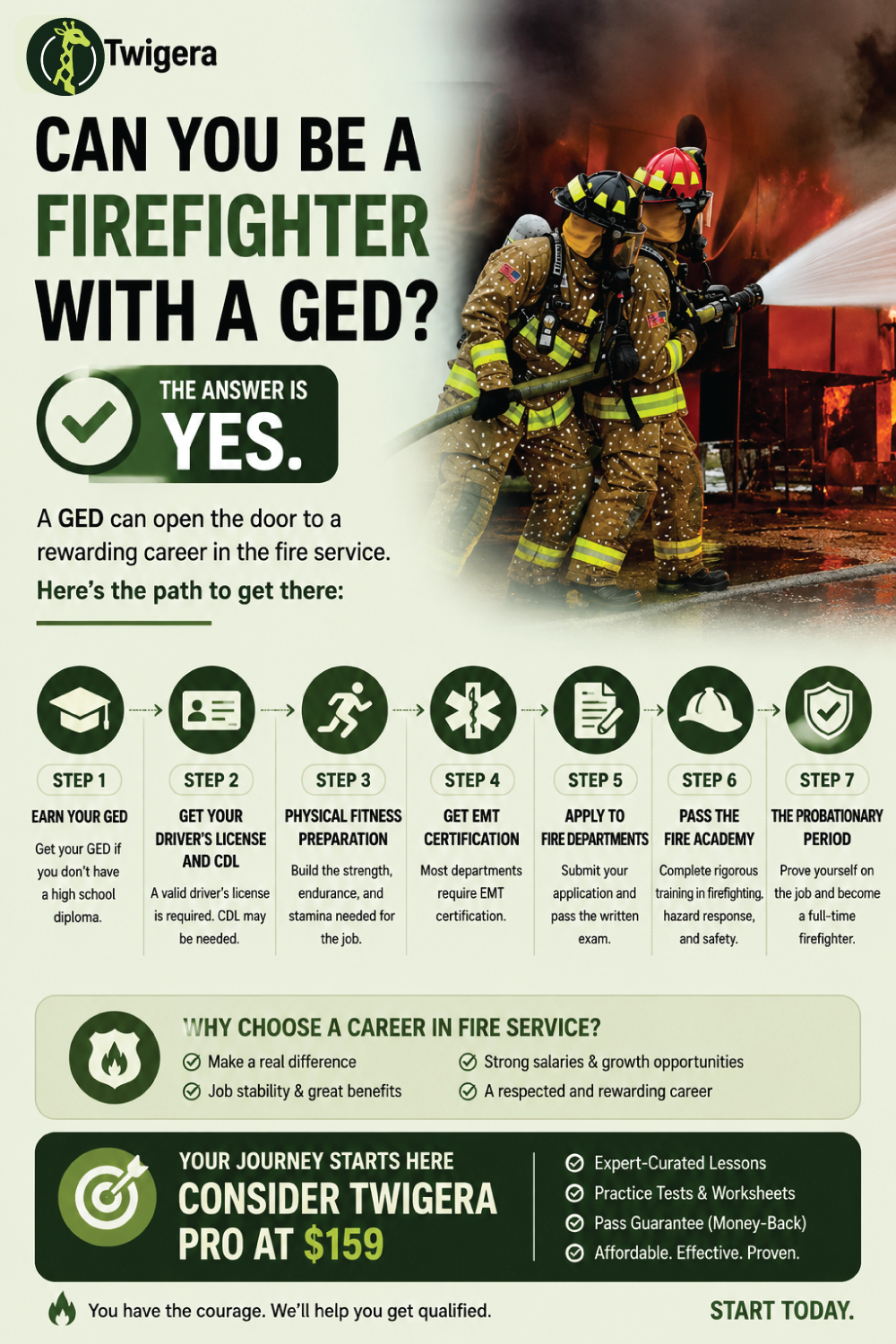
Pin this guide so you can find it again.
We refresh these every season. Save it to a Pinterest board and you’ll get the latest version next time you come back.
Save to PinterestQuestions people ask.
- Can you be a firefighter with a GED?
Yes. Most US fire departments accept a GED as a high school equivalent for entry-level firefighter applications. This includes most municipal and county departments. Federal, military, and volunteer requirements vary by role, so always check the department's official hiring page before applying.
- Do you need a GED to be a firefighter?
Most paid fire departments require a GED or high school diploma as the minimum education credential. Volunteer departments often have more flexible rules. A GED usually covers the education requirement, but you still need to meet testing, fitness, background, and medical standards.
- What do you need to become a firefighter besides a GED?
Most applicants need a valid driver's license, passing scores on a written exam, the Candidate Physical Ability Test (CPAT), a clean background check, a drug test, and a medical screening. Many departments also require EMT certification before or after hiring. If selected, you complete Fire Academy training and a probationary period.
- How much does a firefighter make with a GED?
Your GED does not usually decide your pay. The Bureau of Labor Statistics reports firefighters earned a median annual wage of $59,530 in May 2024. The lowest 10% earned less than $34,490, and the highest 10% earned more than $101,330. Pay varies by location, overtime, certifications, department budget, and rank.
- Can I become a firefighter at 18 with a GED?
Yes, many departments accept applicants who are at least 18 and hold a GED or high school diploma. Some departments set higher minimum ages or add local rules. Junior firefighter and explorer programs let teens under 18 learn about the fire service before full eligibility.
- Do firefighters need to be EMTs?
Many fire departments require EMT certification either before application or after hiring. Firefighters respond to medical calls more often than fires, so EMT training makes your application stronger. Requirements vary by city, county, and state.
- Can I get into military fire service with a GED?
A GED may qualify you for military enlistment, but each branch sets its own score, medical, background, and role-availability rules. Fire protection roles exist across the Air Force, Army, Navy, and Marine Corps. Speak with a recruiter and ask directly about GED eligibility for current fire protection openings.
- What disqualifies someone from being a firefighter?
Common disqualifiers include felony convictions, recent illegal drug use, serious driving violations like a DUI, failed background checks, failed drug tests, and certain medical or physical limitations. Dishonesty during screening can also end your candidacy. Policies vary by department, so check local hiring rules.
- Do I need college to be a firefighter?
You usually do not need college for entry-level firefighter roles. A GED or high school diploma is enough for most departments' education minimum. College credits or a fire science degree typically matter later, when you compete for promotions into officer or chief-level roles.
- How long does it take to become a firefighter with a GED?
The timeline varies by GED prep speed, EMT requirements, application cycles, testing, academy dates, and department hiring speed. From GED prep through probation, plan for roughly 12 to 24 months for paid municipal roles. Volunteer, military, and wildland paths follow different timelines.
Amara is the editor at Twigera. She came to publishing the long way — a decade teaching the GED in community colleges and adult-learning centers, where she watched students pass not on talent or time, but on the strength of a study plan they actually trusted. Now she shapes the guides students read here for the parent studying after a closing shift, the second-career welder, the grandmother finishing what she started forty years ago. Expect honest timelines, math made survivable, and study plans built around real life — not around a textbook's idea of one.
Take the next step — start today.
Our online GED course includes every subject, a free 30-minute diagnostic, and a 7-day refund on every plan.